








Museo de Sitio de Alta Vista

Finest example of the Chalchihuite Culture. Possibly founded by priests emigrated from Teotihuacan to the plains of Zacatecas, the museum houses a rich collection of finely made instruments, jewellery, figures and offerings, including the symbol of the eagle and the serpent.
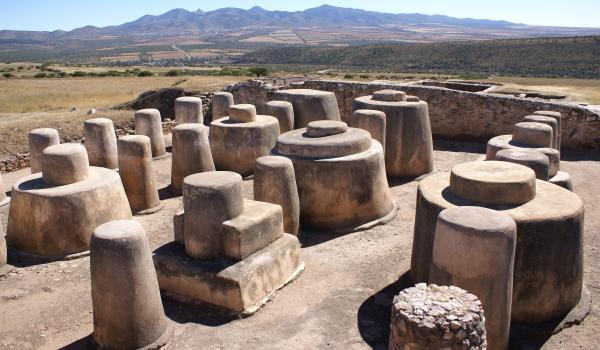
This archeological museum, opened in 2007, exhibits the remains of the pre-Hispanic culture of Chalchihuites, with around 350 archeological finds from the excavations. It provides a clear view of the daily life and beliefs of the ancient inhabitants of the region whose most important ceremonial center of the early period was Alta Vista. It has been established that this shrine was the result of external cultural development, founded by a group of priests from Teotihuacan. The research carried out on the site has also revealed very significant cosmological and astronomical aspects. It is known that the founders of this center managed to record the solstices and equinoxes precisely from different points of observation, and that they oriented their buildings to specific points of the compass.
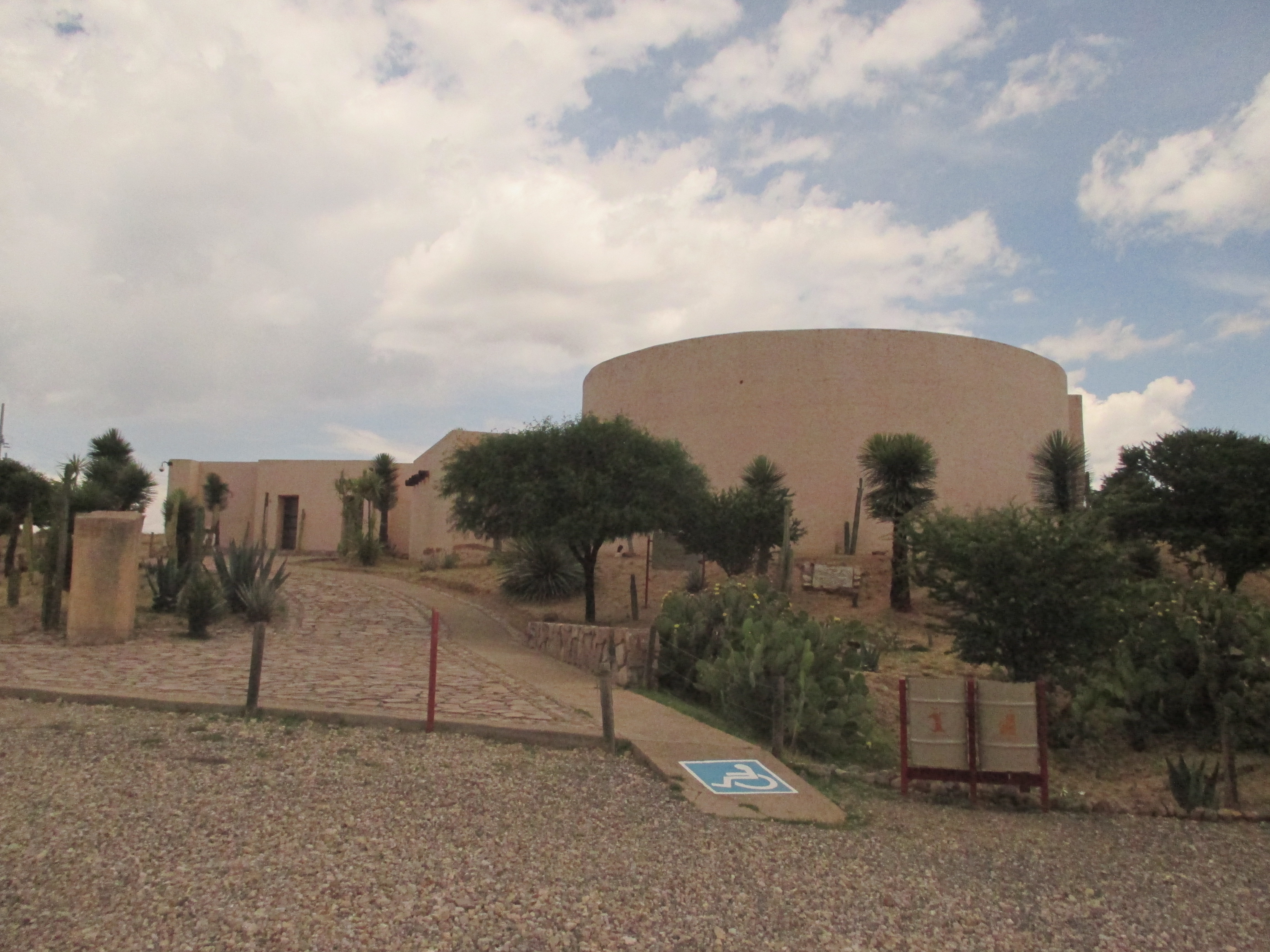
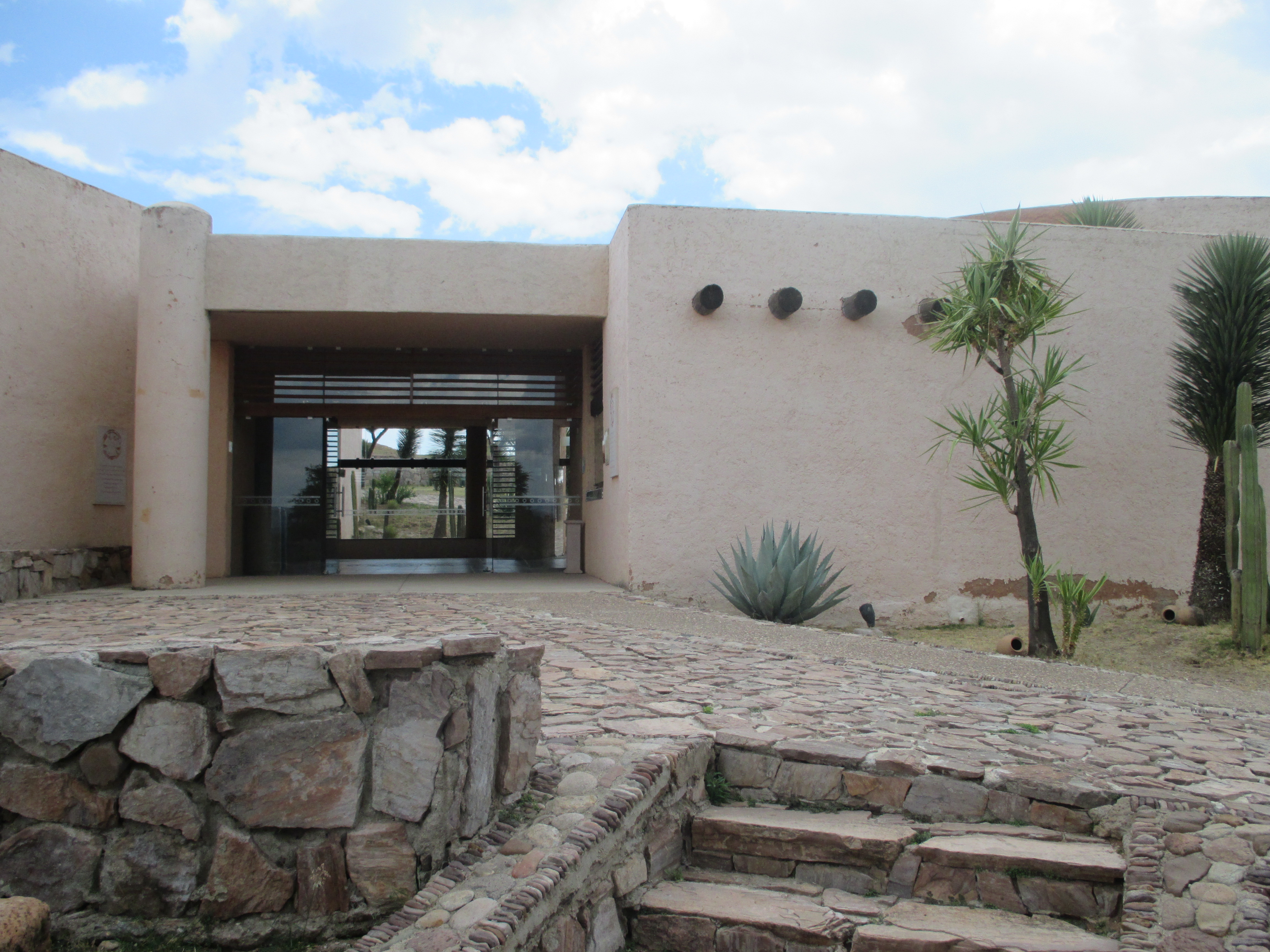
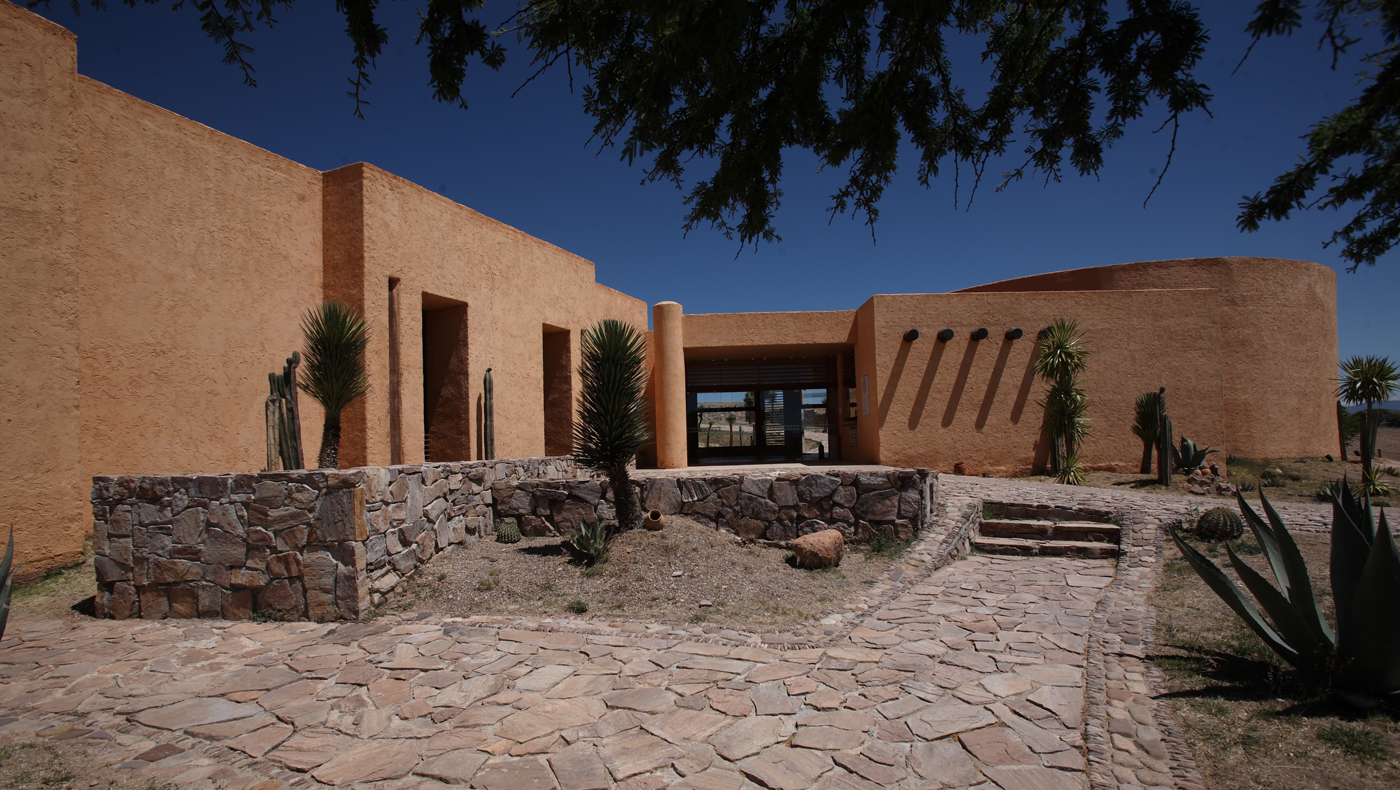
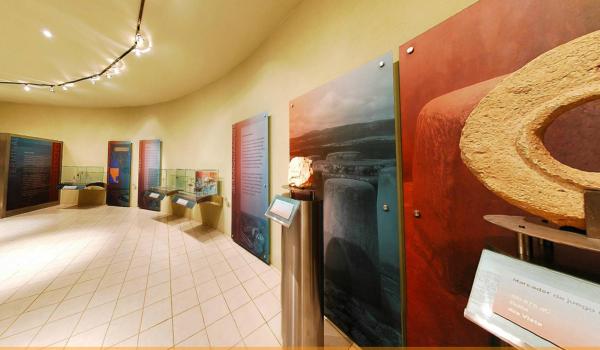
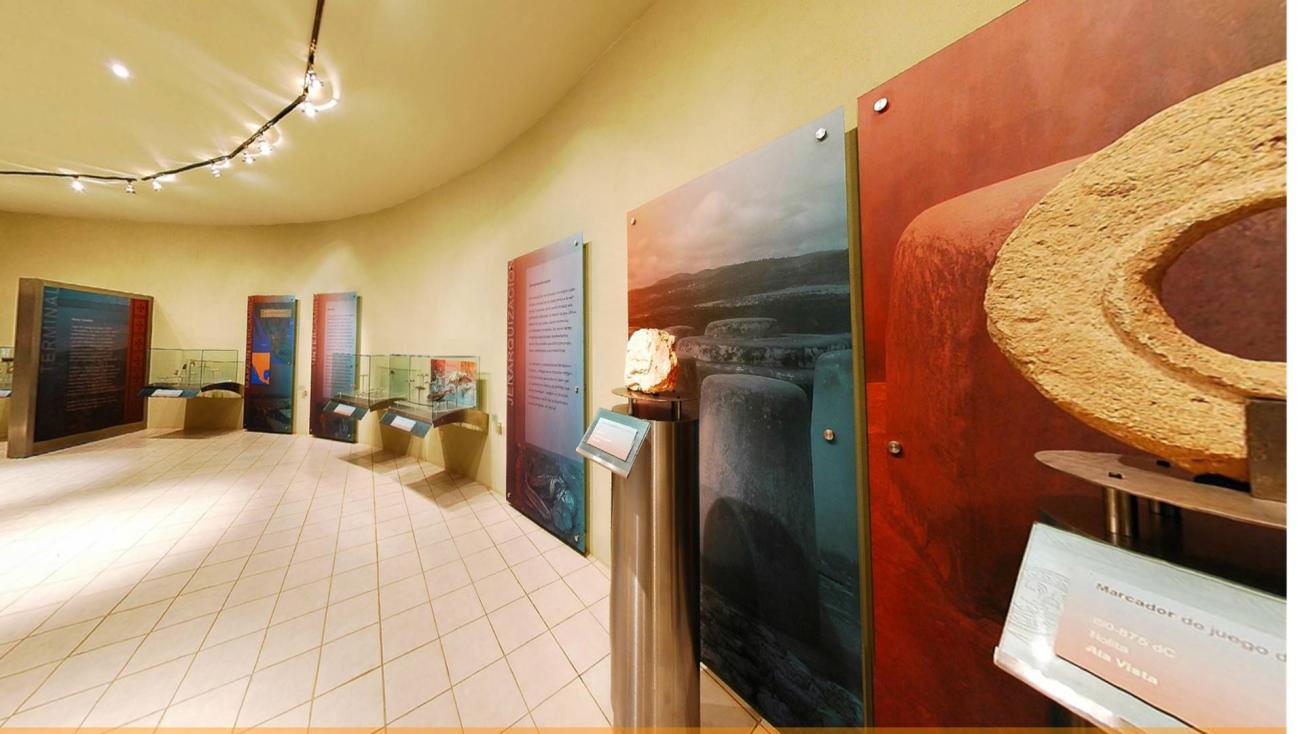
The modern building complex has a large circular exhibition gallery. The displays feature 350 archeological pieces, found in the first instance by the archeologist J. Charles Kelley and his team from the Southern Illinois University in the United States, and subsequently in partnership with the archeologists of INAH Zacatecas.
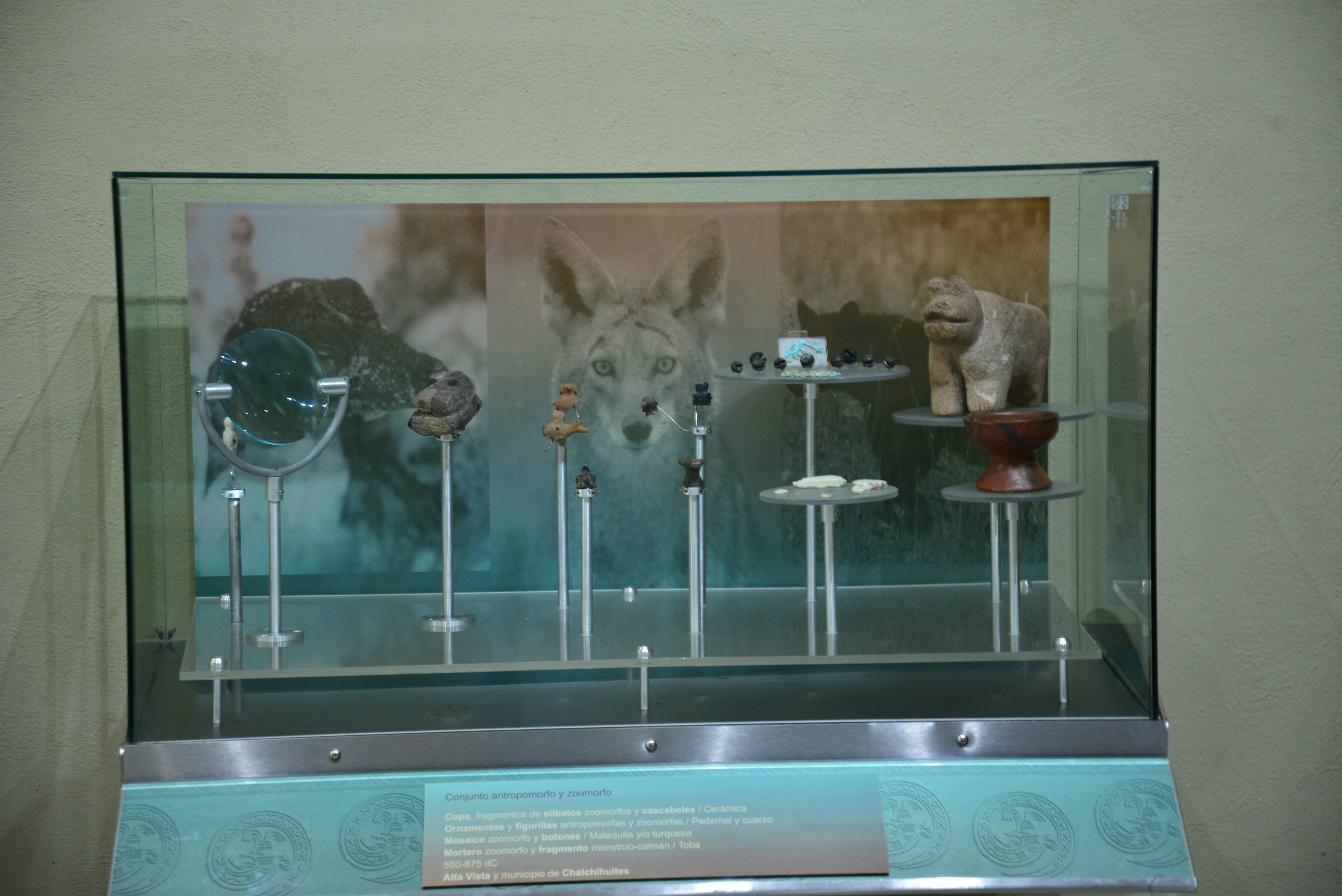
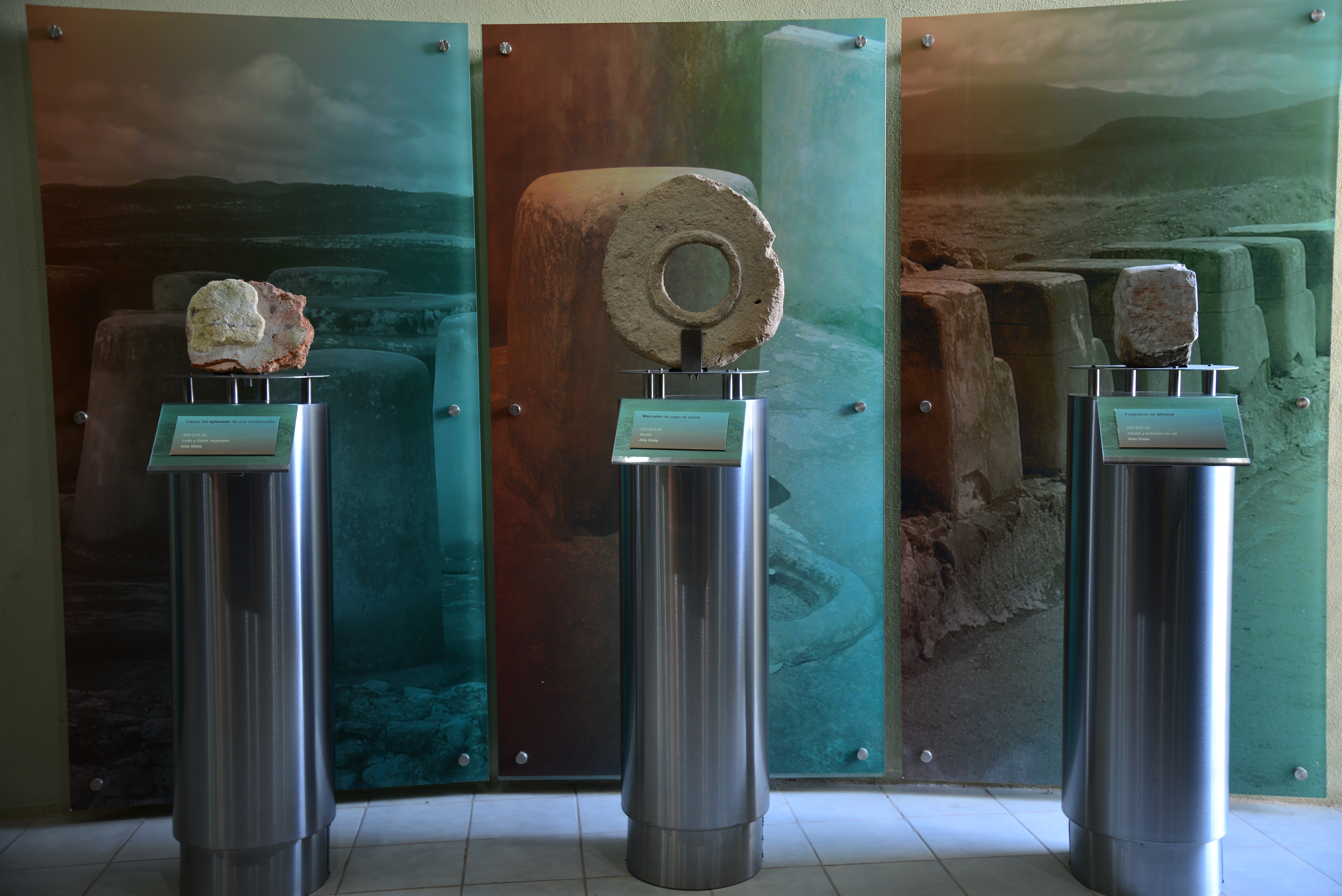
The four main topics covered are: the broader context, everyday life, the apogee and the terminal period. The collection includes instruments worked in stone, ceramic items, wood skin and bone, anthropomorphic and zoomorphic figurines, turquoise and malachite necklaces, pendants made from flint, malachite and quartz, and fragments of battlements. There is an important mortuary offering of earthenware pots bearing the symbol of the eagle subduing the serpent found in Structure 2B, also known as the Pyramid of the Sun, as well as a scoreboard for the ball game, squashes or gourds decorated with natural pigments, rings made from nut shells with turquoise and malachite inlay; small cups, a pot associated with the pulque cult and human remains which show signs of disease, or perforations and deformations of a ritual nature. Visits are complemented by a video on astronomy and Alta Vista’s relationship to the Mesoamerican world view.
Background
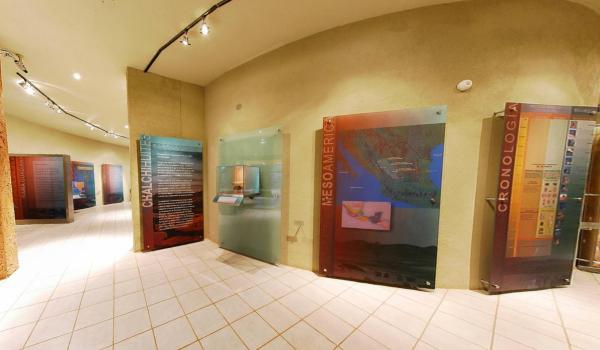
This section provides context about the geographical area occupied by the Chalchihuites Culture, located in the western part of the state of Zacatecas and the southern part of Durango. It explains the possible processes behind the transition from a nomadic to a sedentary lifestyle. It remains…
Background
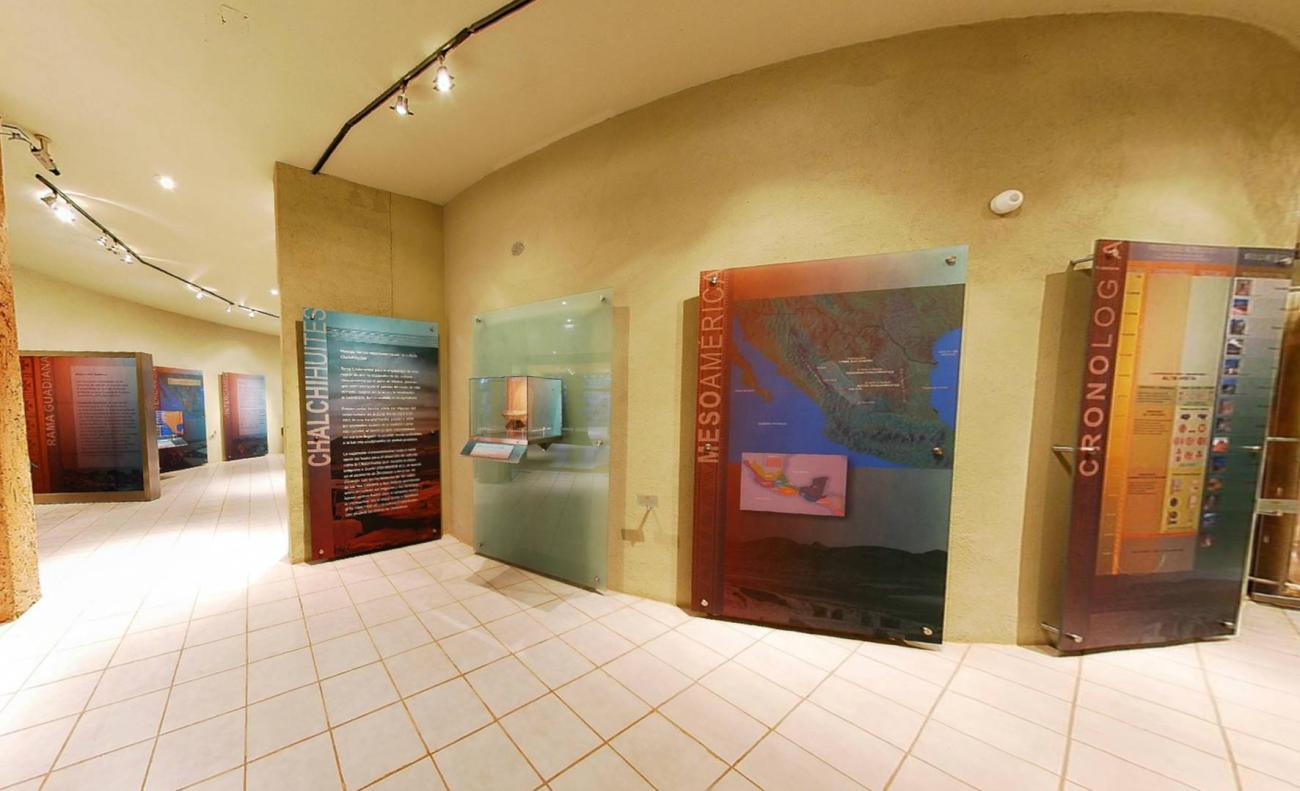

This section provides context about the geographical area occupied by the Chalchihuites Culture, located in the western part of the state of Zacatecas and the southern part of Durango. It explains the possible processes behind the transition from a nomadic to a sedentary lifestyle. It remains unclear whether this was a gradual transformation led by local semi-nomadic groups from the Loma San Gabriel tradition, by colonizing groups from the south in search of arable land, or by a combination of both.
Special attention is given to the Loma San Gabriel Tradition, which was composed of various groups inhabiting western Zacatecas and Durango. These groups promoted an agricultural and ceramic culture considered the oldest in the region. The objects on display in this section include utensils from this tradition such as grinding stones (metates), pestles, axes, knives, projectile points, and ceramic items. Most of these utensils were made domestically for local use, reflecting a low degree of specialization in their production.
Daily Life
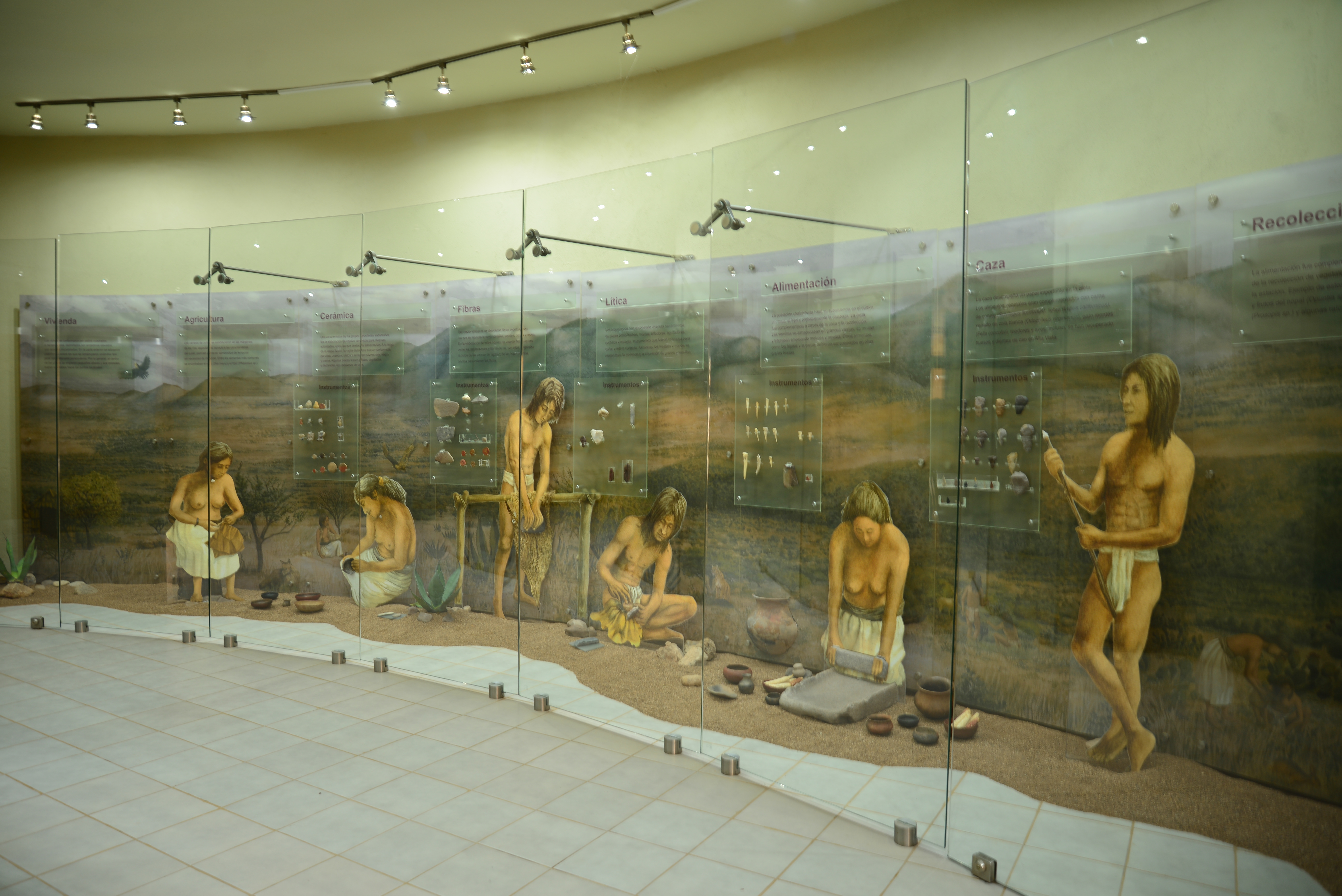
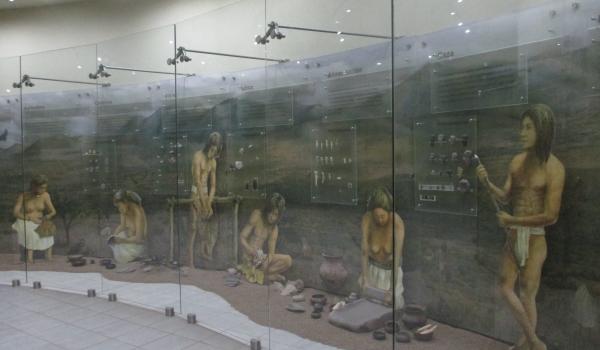
This section showcases the productive and domestic activities of the Chalchihuites population. Remarkably, the artifacts are linked to specific activities, and these activities are in turn associated with individuals, highlighting their social roles. Labor division followed gender and age roles.…
Daily Life
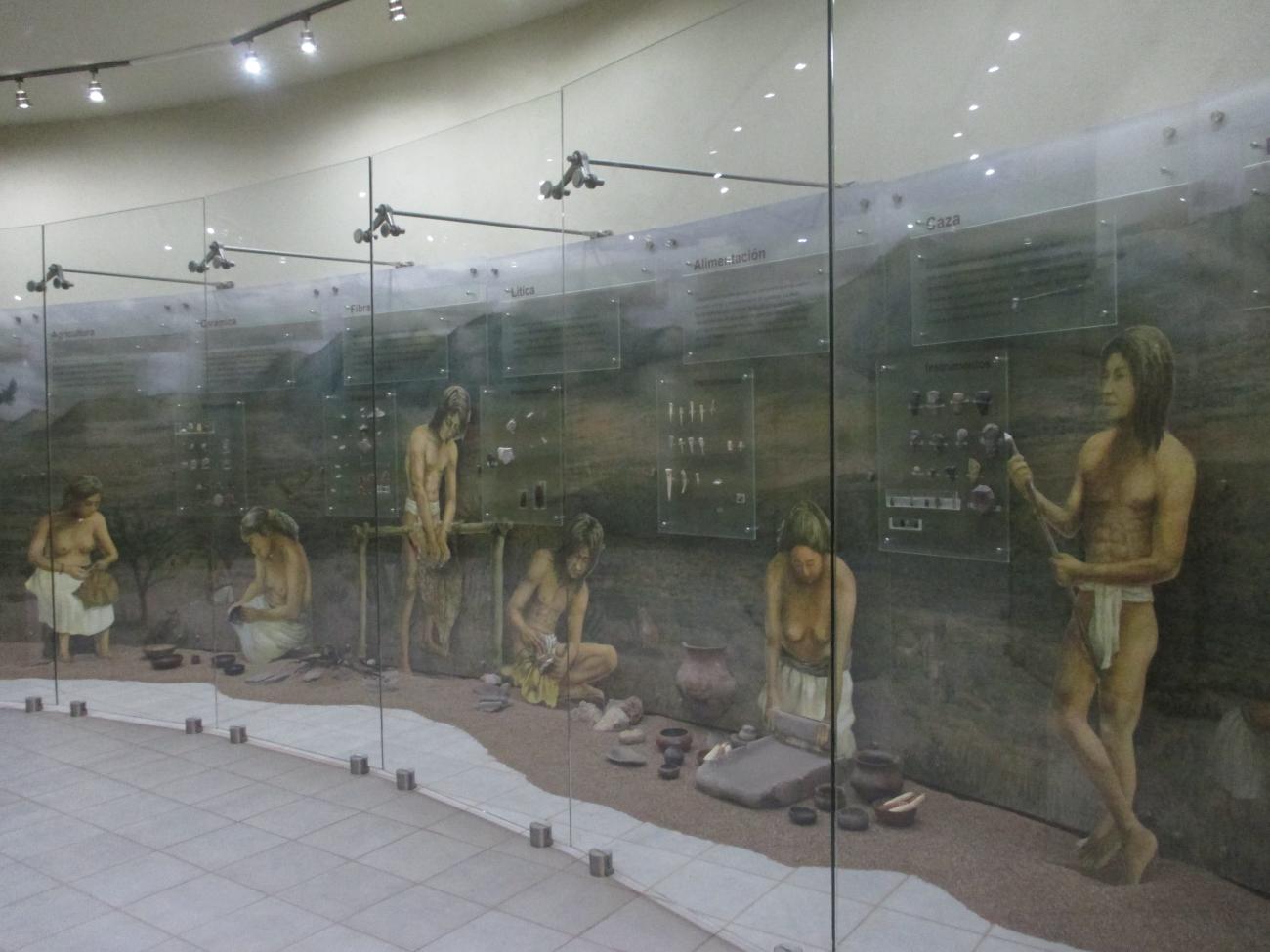
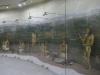
This section showcases the productive and domestic activities of the Chalchihuites population. Remarkably, the artifacts are linked to specific activities, and these activities are in turn associated with individuals, highlighting their social roles. Labor division followed gender and age roles.
Agriculture was the main source of food, complemented by the gathering and hunting of naturally available resources that varied according to the seasons. Other activities included working with fibers to manufacture ropes, mats, baskets, and nets. Equally important were stone tool production and ceramic manufacturing. The instruments on display are associated with these tasks and include axes, hammers, whetstones, sharpeners, knives, blades, grinding stones and hands, pots, bowls, plates, and jars. These come in red, black, and cream tones, with some pieces polished, brushed, or decorated with incised nail marks.
The panel of the daily life display case presents aspects of agriculture in relation to cultivated lands. It also illustrates the layout of village settlements, which were made up of square or rectangular patios outlined by raised walkways with stepped entrances, among other features. The display further includes elements of the flora and fauna that were present during the occupation of the region.
Another key activity in the area was mining, forming one of the most extensive industries in all of Mesoamerica. This section presents mining extraction techniques, the technologies used inside the mines, and the minerals sought, such as weathered flint, quartz, pyrite, and hematite. Some of these were used to manufacture ornamental items, while others served as pigments.
Also within this section, skeletal remains are displayed. These help identify possible physical characteristics and hereditary, occupational, climatic, dietary, and cultural factors.
Foundation and Peak
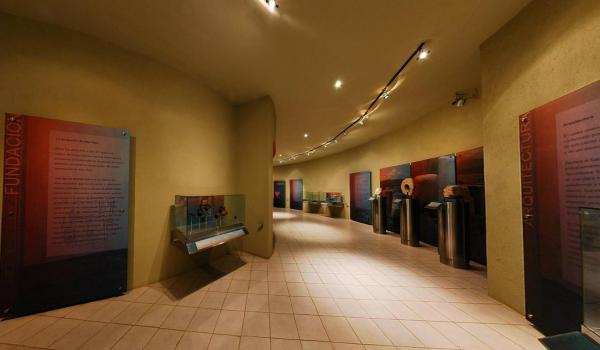
This section begins with a video that introduces the visitor to Mesoamerican cosmogonic concepts.It then highlights the importance of the Chalchihuites culture as the result of a series of cultural changes. It references the foundation of the ceremonial center between the years 450 and 500, over…
Foundation and Peak
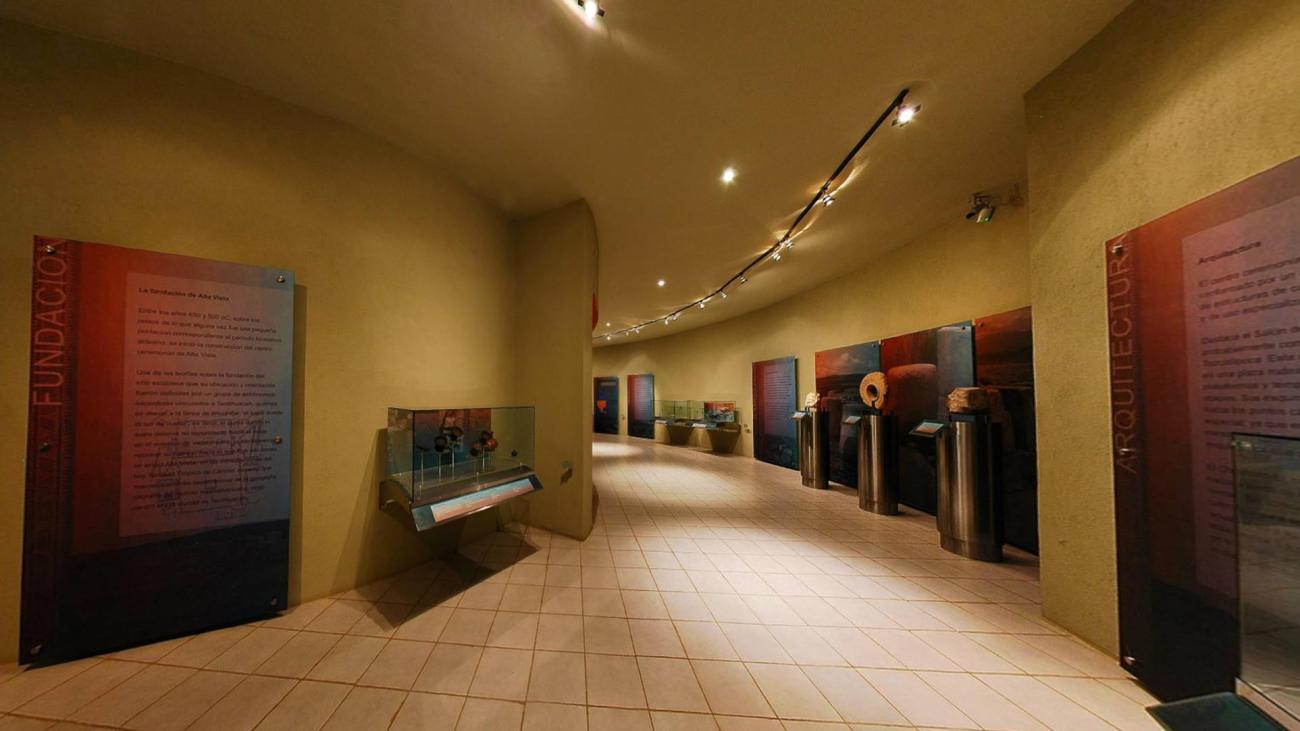
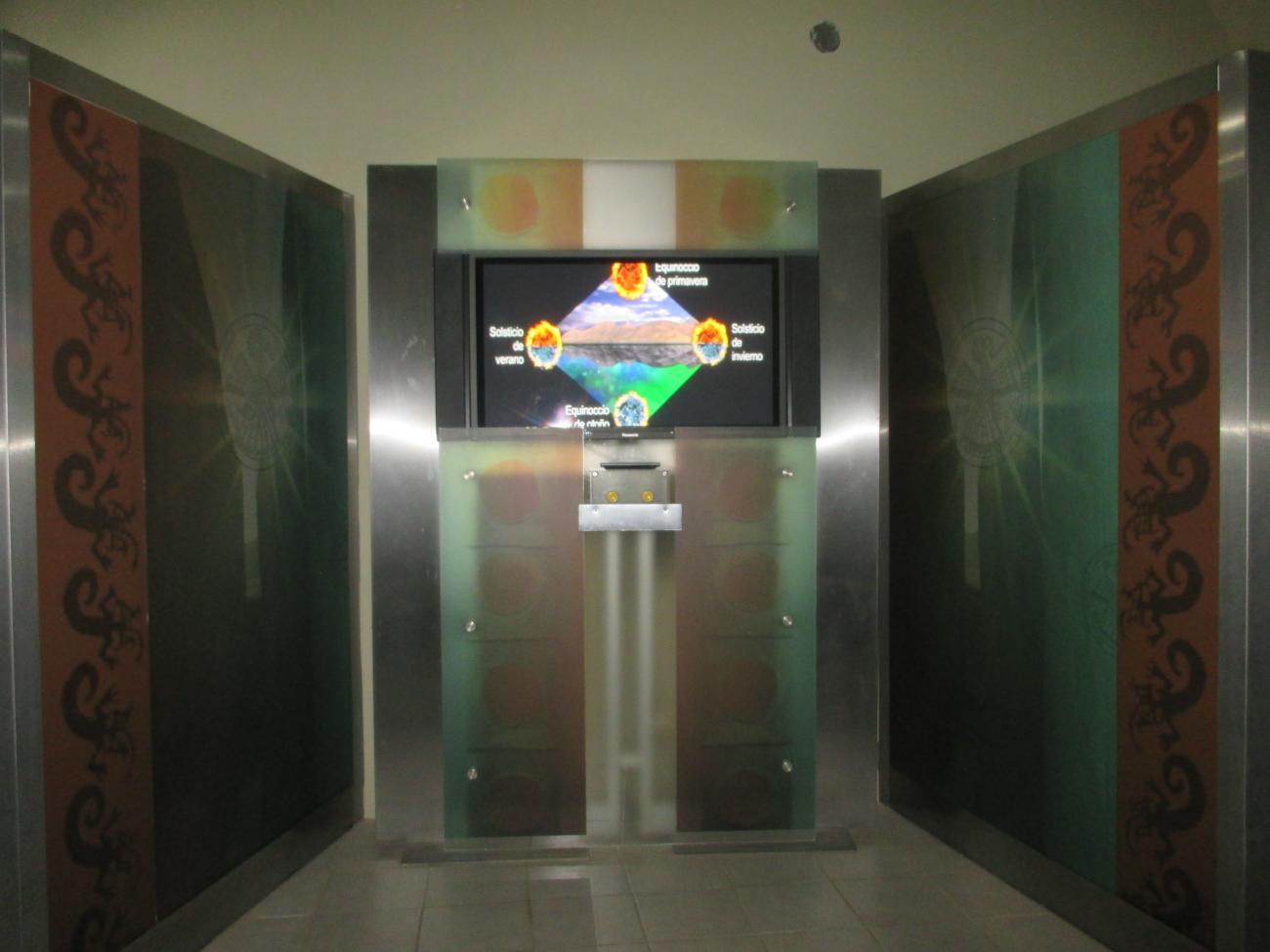


This section begins with a video that introduces the visitor to Mesoamerican cosmogonic concepts.
It then highlights the importance of the Chalchihuites culture as the result of a series of cultural changes. It references the foundation of the ceremonial center between the years 450 and 500, over the remains of a small village from the formative village period. These transformations were rooted in astronomical and religious interests emanating from Teotihuacan, where a group of priests set out to find "the place where the sun turns," referring to the point where the sun stops its northward movement at the summer solstice before heading south again. By the 6th century, Alta Vista reached its peak, reflected in the construction of most of the ceremonial center. The site's architectural layout shows clear similarities to Teotihuacan residential complexes.
The objects displayed here—anthropomorphic and zoomorphic figures—confirm the ceremonial center’s significance. Ceramic pieces with highly important iconography illustrate the assimilation and integration of cosmogonic and religious concepts from Classic-period Mesoamerica. A particularly notable burial offering found in the Hall of Columns includes the remains of sacrificed individuals and consists of four goblets with eagle-and-serpent iconography and a flute fragment decorated with a pseudocloisonné technique, along with a súchil-type jug and a small polished brown ceramic pot.
In the architecture area, the religious layout of the ceremonial center is presented. Construction techniques and the orientation of the main buildings are discussed, especially how their corners are aligned with the cardinal directions. A red-pigmented battlement fragment and several layers of plastering are displayed.
Another noteworthy offering was deposited at the Pyramid of the Sun (Structure 2B), associated with high-ranking individuals. It included ornaments (rings, necklaces, pectorals, pendants, etc.) made of flint, turquoise, shell, and ceramic.
An adjoining display case presents objects that show how the Chalchihuites culture participated in complex exchange networks, acquiring goods and materials not native to the region such as shell, salt, cotton, and notably, turquoise. These contacts also facilitated the transmission of technical and ideological concepts.
Terminal Phase
The final section of the museum addresses the decline of the Chalchihuites culture. After its cultural and demographic peak, the site ceased to participate in trade networks, contributing to the ceremonial center’s downfall. By the late 9th century, the ruling class had clearly lost control,…
Terminal Phase

The final section of the museum addresses the decline of the Chalchihuites culture. After its cultural and demographic peak, the site ceased to participate in trade networks, contributing to the ceremonial center’s downfall. By the late 9th century, the ruling class had clearly lost control, leading to the site’s eventual abandonment around 950 CE. This led to population movements toward the Guadiana Valley in present-day Durango, marking the beginning of the late phase of the Chalchihuites culture (875–1400/1450), with new cultural exchange networks.
In this area, ceramic vessels and bowl fragments from Durango valleys are displayed.
The museum concludes with a discourse on cultural continuity, showing similarities between certain practices of the ancient inhabitants of Alta Vista and some traditions still maintained by present-day Huichol and Cora peoples of the Gran Nayar region. To illustrate this continuity, replicas of Huichol offerings are displayed, and a particularly significant item is a ceremonial goblet (550–875 CE) from an offering. Decorated using the pseudocloisonné ceramic technique, this piece portrays the moment when the sun (in the form of an eagle) devours the serpent to control the rains and ensure a beneficial harvest.
Document
- DirecciónPatricia Monreal Martínezpatricia_monreal@inah.gob.mx+52 (492) 922 50 85